
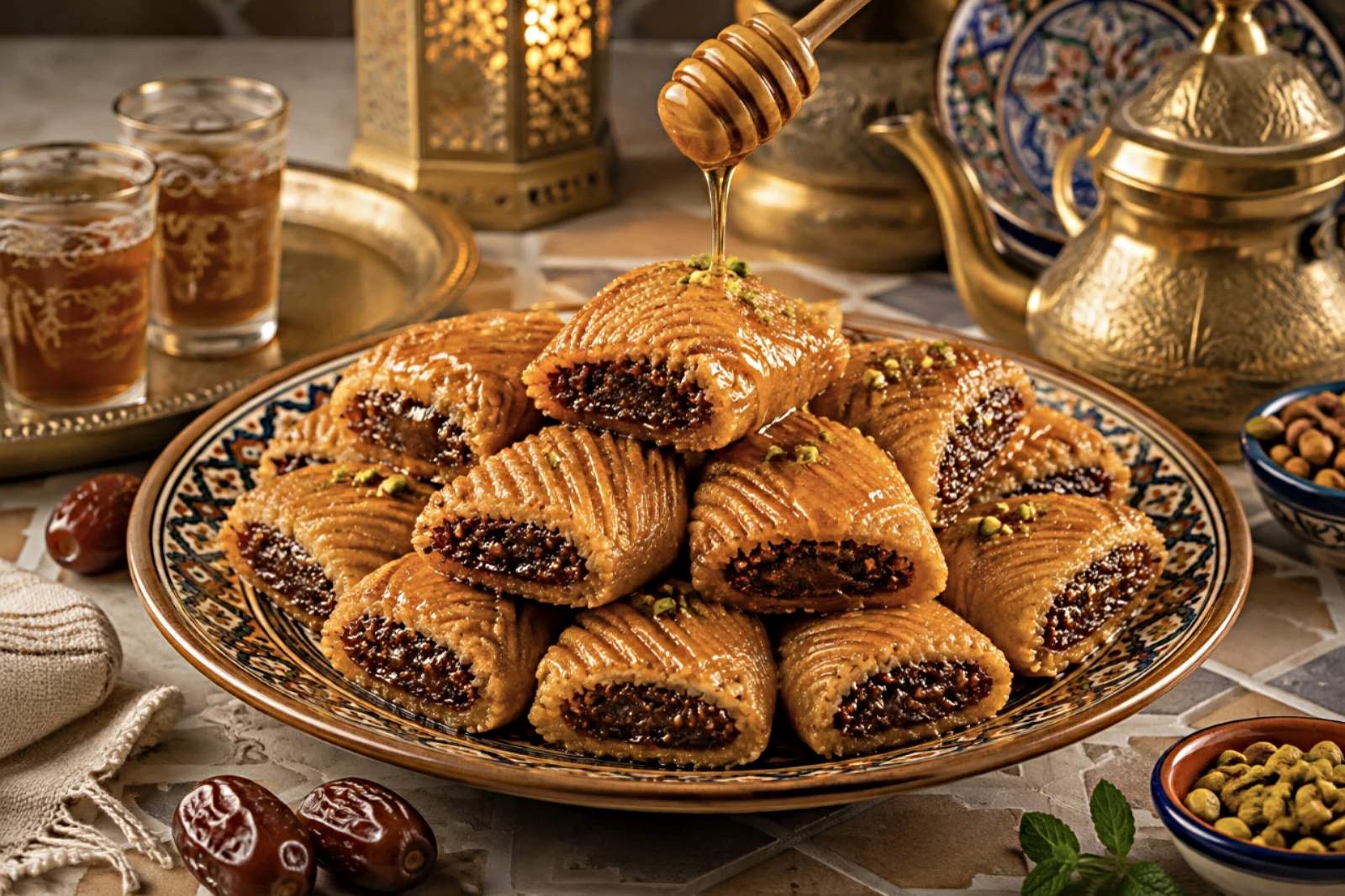
TunisiaMakroudh

Presented by
Ameur Letaief
Executive Chef
President · Tunisia
- Yield
- 20–25 pieces
- Preparation
- 45 minutes
- Cooking
- 30 minutes
- Difficulty
- Medium
Makroudh is one of Tunisia's most distinctive and beloved traditional pastries. Golden on the outside, aromatic and richly filled within, it brings together semolina, dates, fragrant spices and honey in a remarkable expression of North African confectionery tradition.
Its history is closely associated with Kairouan, one of Tunisia's most important historic and cultural cities. Over the centuries, Makroudh spread throughout the country, developing different regional interpretations while preserving its essential identity.
Traditionally, Makroudh is prepared from a semolina-based dough wrapped around an aromatic date filling. The pastries are often decorated with characteristic geometric patterns, fried until deeply golden and, while still warm, immersed in fragrant honey or syrup.
In the version presented here, dates are combined with dried figs, adding another layer of natural sweetness, texture and depth to the filling.
Makroudh is much more than a sweet delicacy. It forms part of Tunisia's gastronomic identity and is closely associated with hospitality, family gatherings, celebrations and special occasions. Recipe contributed by Chef Ameur Letaief, National President — Tastynation Global Tunisia.
Ingredients
For the dough
- 3 cups fine semolina
- ½ cup all-purpose flour
- ½ cup melted butter or traditional fat
- ¼ cup sugar
- 1 tsp orange blossom water
- A pinch of salt
- Water, as needed
For the filling
- 500 g dates, pitted
- 250 g dried figs
- 1 tsp ground cinnamon
- ½ tsp caraway seeds, optional
- ½ tsp orange blossom water
For the honey syrup
- 2 cups honey
- ½ cup water
- 1 tsp lemon juice
- 1 tsp orange blossom water
For frying
- Vegetable oil, as needed
Preparation
- 1
Process the pitted dates and dried figs until they form a thick, relatively smooth paste. Add the cinnamon, caraway seeds if using, and orange blossom water. Mix well and shape the filling into thin, elongated logs. Set aside.
- 2
In a large bowl, combine the semolina, flour, sugar and salt. Add the melted butter and gently work it into the dry ingredients with your fingertips until the mixture resembles coarse crumbs.
- 3
Add the orange blossom water, followed gradually by small amounts of water. Work the mixture gently until a soft, pliable and homogeneous dough forms, avoiding excessive kneading.
- 4
Take a portion of dough and shape it into a long roll. Create a groove along the centre and place one of the date-and-fig filling logs inside, then carefully close the dough around the filling and roll it until evenly shaped.
- 5
Using a traditional Makroudh mould, or carefully with a knife, create the characteristic decorative patterns on the surface. Cut into equal pieces, traditionally shaped into diamonds or slightly elongated rectangles.
- 6
Heat the vegetable oil over medium heat and fry the Makroudh in small batches until evenly cooked and beautifully deep golden. Remove from the oil and allow them to drain briefly.
- 7
Gently warm the honey with the water and lemon juice, remove from the heat and add the orange blossom water. The honey should remain warm and fluid without being aggressively boiled.
- 8
While the Makroudh are still warm, immerse them in the fragrant honey and allow them to remain briefly so they absorb its flavour. Carefully remove them, drain any excess honey, and leave to cool before serving.
Plating
Present the Makroudh on a traditional Tunisian ceramic platter, lightly glazed with fragrant honey. They pair exceptionally well with Tunisian mint tea, tea with pine nuts, or strong coffee. For a contemporary presentation, serve with a delicate drizzle of honey, accompanied by dates and dried figs.
Serving suggestion — Semolina is at the heart of Makroudh — do not overwork the dough, so the pastry keeps its delicate, slightly crumbly texture. Use soft, high-quality dates, and use orange blossom water with restraint. Allowing the Makroudh to rest for several hours after dipping in honey helps the flavours develop.
One World • One Kitchen • One Family