TunisiaHarissa

Presented by
Ameur Letaief
Executive Chef
President · Tunisia
- Yield
- 500 g
- Preparation
- 20 minutes
- Cooking
- 10 minutes
- Difficulty
- Easy
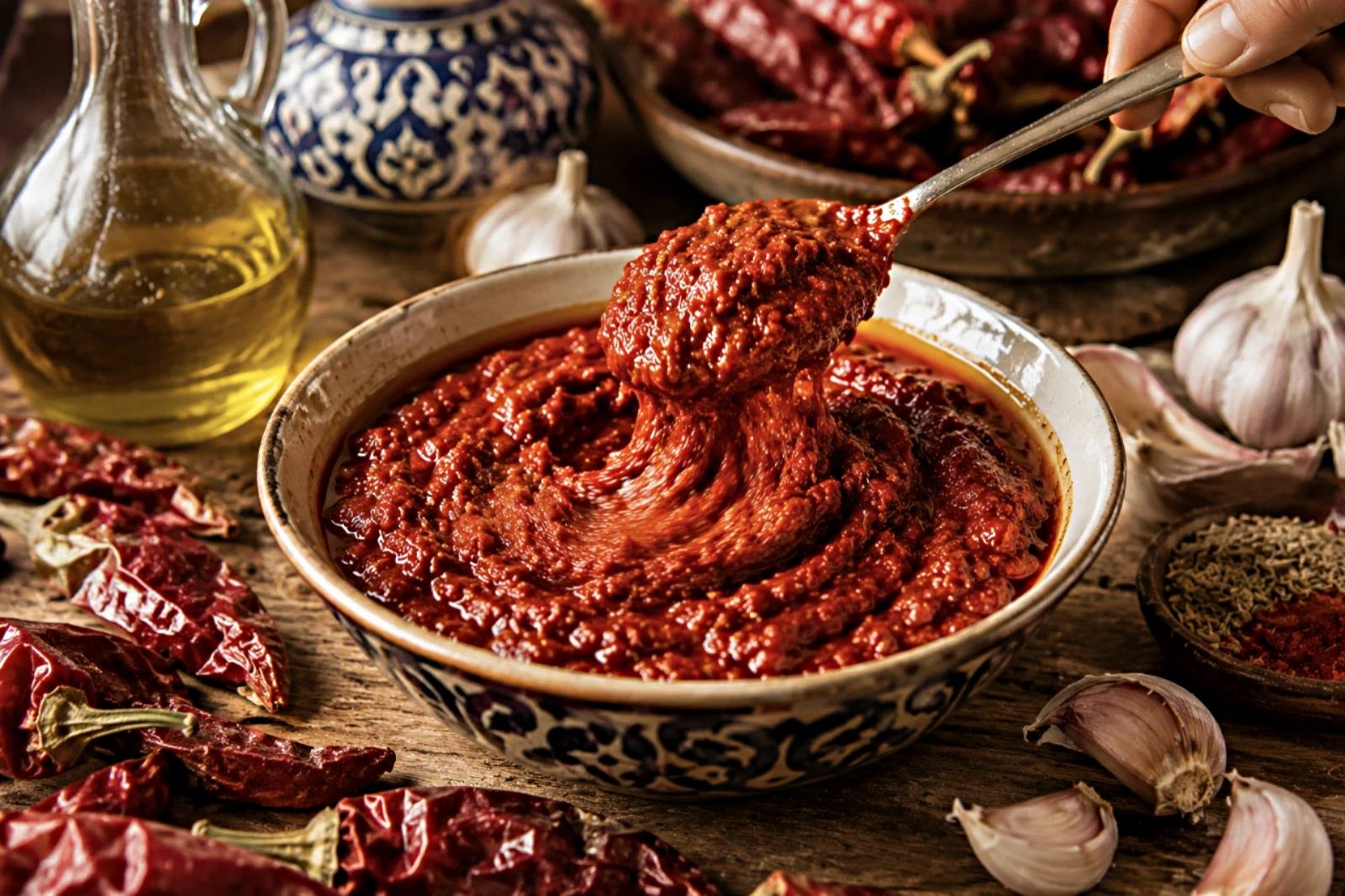
Harissa is the most iconic condiment of Tunisian gastronomy and one of the country's greatest culinary symbols. Prepared from sun-dried red chili peppers, garlic, olive oil, and carefully selected aromatic spices, it has been an essential part of Tunisian cuisine for centuries.
Its origins date back to the Ottoman period, when chili peppers were introduced to North Africa. Tunisian cooks transformed this new ingredient into a rich and aromatic chili paste that soon became an indispensable component of everyday cooking. Today, Harissa is recognized worldwide as the signature flavor of Tunisia and is officially listed by UNESCO as part of Tunisia's intangible cultural heritage related to traditional culinary practices.
More than just a spicy paste, Harissa represents the warmth, generosity, and vibrant culinary identity of the Tunisian people. It enhances countless traditional dishes, from couscous and stews to grilled meats, seafood, sandwiches, soups, and appetizers.
Ingredients
- 250 g dried red chili peppers
- 4–6 garlic cloves
- 1 tsp caraway seeds
- 1 tsp coriander seeds
- 1 tsp cumin seeds
- ½ tsp sea salt (or to taste)
- 100 ml extra virgin olive oil
- 1 tbsp tomato paste (optional)
- 1 tsp lemon juice or white vinegar (optional, for preservation)
Preparation
- 1
Remove the stems and most of the seeds from the dried chili peppers.
- 2
Rinse briefly and soak the peppers in warm water for 20–30 minutes until softened.
- 3
Meanwhile, lightly toast the caraway, coriander, and cumin seeds in a dry pan until fragrant. Allow them to cool.
- 4
Drain the softened peppers thoroughly.
- 5
Place the peppers, garlic, toasted spices, and salt into a food processor.
- 6
Blend while gradually adding the olive oil until a thick, smooth paste forms.
- 7
If desired, add the tomato paste for a richer color and flavor.
- 8
Add the lemon juice or vinegar to help preserve the paste and enhance its freshness.
- 9
Blend once more until silky and homogeneous.
- 10
Transfer to a sterilized glass jar and cover the surface with a thin layer of olive oil before sealing.
Plating
Harissa is traditionally served alongside couscous, grilled lamb, roasted vegetables, seafood, sandwiches, soups, and egg dishes. It can also be mixed into marinades, sauces, yogurt, or dressings, adding the unmistakable character of Tunisian cuisine to countless recipes.
Serving suggestion — Authentic Harissa relies on high-quality sun-dried chili peppers and premium extra virgin olive oil. Adjust the heat level by keeping or removing more of the chili seeds, use freshly toasted spices for deeper flavor, and always keep the surface covered with olive oil to preserve freshness. Although Harissa is famous for its heat, its true value lies in the balance between spice, aroma, and depth of flavor — a small spoonful is often enough to transform a simple dish into an authentic Tunisian culinary experience.
One World • One Kitchen • One Family