
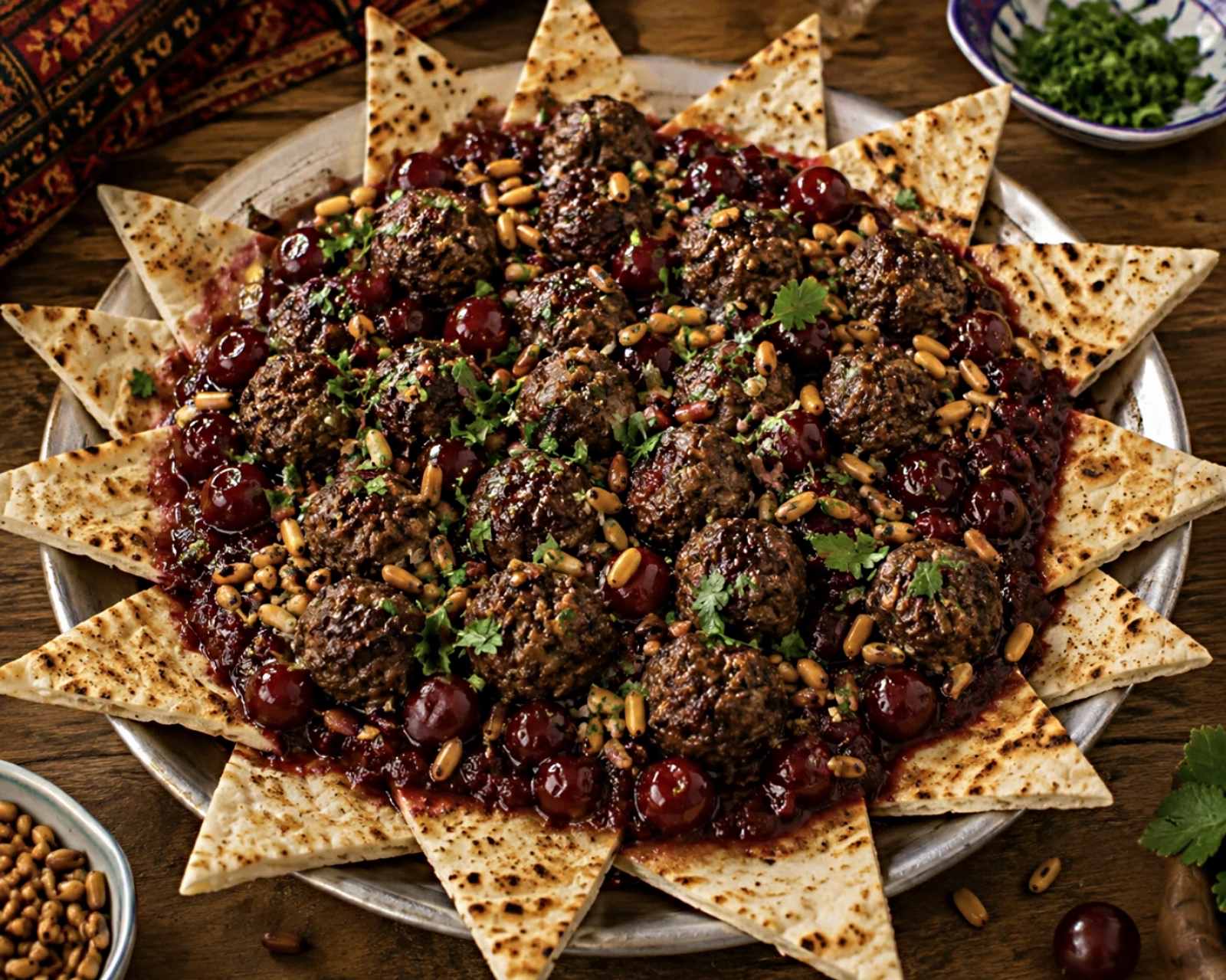
SyriaTraditional Aleppine Meat with Cherries (Lahmeh bi Karaz)

Presented by
Choukri Kouyoumdji
President of Tastynation Global Syria · Global Culinary Ambassador
President · Syria
- Yield
- 4 servings
- Preparation
- 60 minutes
- Difficulty
- Medium
Lahmeh bi Karaz, traditionally known as Meat with Cherries, is one of the most distinctive and treasured dishes of Aleppine cuisine. It beautifully reflects the gastronomic identity of Aleppo, a historic city that for centuries stood at the crossroads of cultures, trade routes, spices, aromas and culinary traditions.
The uniqueness of this dish lies in the remarkable balance between lamb and sour cherries. The natural acidity of the cherries, the carefully controlled sweetness of sugar, the aromatic spices and the richness of lamb come together to create an elegant sweet-and-sour combination with exceptional depth and character.
Traditionally, minced lamb is shaped into small meatballs, often known as kababat, which are cooked and then gently simmered in a rich sauce made from sour cherries. The dish is presented over pieces of Arabic flatbread and finished with toasted pine nuts, fresh parsley and a subtle touch of cinnamon.
The result is a dish built on beautiful contrasts: sweet and sour, rich and aromatic, tender and crisp — a remarkable expression of the sophisticated culinary heritage of Aleppo. Recipe submitted by Chef Choukri (Shukri) Kouyoumdji, National President — Tastynation Global Syria.
Ingredients
For the cherry sauce
- 1.5 kg fresh sour cherries (griottes), pitted
- 5–6 tbsp sugar, depending on the natural acidity of the cherries
For the meat
- 1 kg minced lamb
- 2 tsp salt
- 2 tsp Aleppo spice blend
For serving
- 6 pieces Arabic flatbread (pita)
- ¼ cup pine nuts, toasted in clarified butter (ghee)
- ½ cup fresh parsley, finely chopped
- A pinch of cinnamon
Preparation
- 1
Wash the cherries thoroughly and carefully remove the pits, preserving as much of their natural juice as possible. Gently crush some of the cherries by hand without completely puréeing them — some pieces of fruit should remain visible in the finished sauce.
- 2
Place the cherries together with their juices in a saucepan over low heat. Gradually add the sugar, adjusting the quantity according to the natural acidity of the fruit, and simmer gently until the cherries become tender and the sauce develops a slightly thick, glossy consistency.
- 3
Place the minced lamb in a bowl. Add the salt and Aleppo spice blend and knead thoroughly until the seasoning is evenly distributed. Shape into small meatballs approximately the size of a walnut or slightly smaller.
- 4
Cook the meatballs until lightly browned on the outside while keeping them succulent inside.
- 5
Add the cooked meatballs, together with their flavourful cooking juices, to the saucepan with the cherry sauce. Simmer together over very low heat for approximately 10–15 minutes, allowing the lamb to absorb the sweet-and-sour character of the cherries.
- 6
Cut the Arabic flatbread into equal-sized triangles and arrange them around a large serving platter in a circular pattern, with the pointed ends facing outward.
- 7
Spoon some of the warm cherry sauce over the bread, allowing it to absorb the aromatic juices. Arrange the meatballs evenly over the soaked bread and finish with the remaining cherries and sauce.
- 8
Garnish generously with toasted pine nuts and finely chopped fresh parsley, then finish with a delicate pinch of cinnamon.
Plating
Lahmeh bi Karaz is traditionally presented on a large communal platter, with triangles of Arabic flatbread arranged around the meat in a decorative pattern. The deep ruby-red cherry sauce, tender lamb meatballs, golden toasted pine nuts and vibrant parsley create a striking presentation that reflects the richness and elegance of Aleppine cuisine.
Serving suggestion — The balance between sweetness and acidity defines this recipe — the sugar should never overpower the natural tartness of the cherries. Use sour cherries or griottes for the most authentic character, avoid puréeing them completely, and keep the meatballs small and uniform so they absorb the sauce while holding their shape.
One World • One Kitchen • One Family
