
Back to recipes
Rouladen
Germany flagGermany

Rouladen

Anna Apostolia Rapti

Presented by

Anna Apostolia Rapti

Chef

Ambassador · Greece / Germany

Yield
4 servings
Preparation
30 minutes
Cooking
1.5–2 hours
Difficulty
Medium

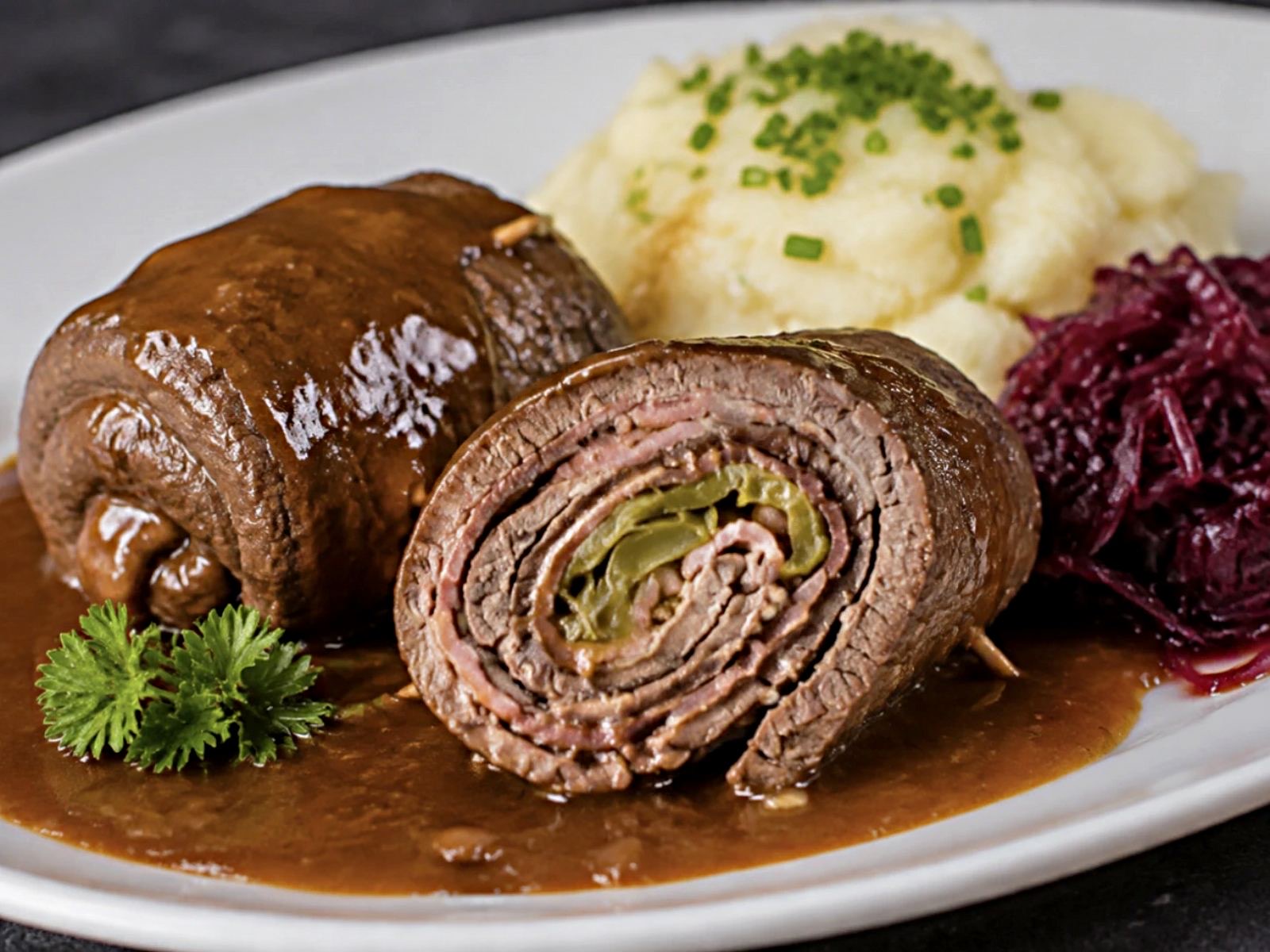
Rouladen are one of the most iconic and beloved dishes of traditional German gastronomy. They consist of thin slices of beef, traditionally filled with mustard, bacon, onions, and pickled cucumbers, rolled carefully and slowly braised in a rich and aromatic sauce until the meat becomes exceptionally tender.

The history of Rouladen is deeply connected with German rural and family cooking traditions, where the careful use of simple ingredients and slow cooking techniques played an important role. Housewives traditionally transformed thin cuts of beef, including cuts that required longer cooking times, into a flavorful and satisfying dish by combining them with a carefully balanced filling.

Rouladen became especially popular as a Sunday family meal, as their preparation requires time, patience, and care — values that are central to the German tradition of cooking for loved ones. Every region of Germany has developed small variations, but the essence of the dish remains the same: tender beef, a flavorful filling, and a deep, rich sauce.

Today, Rouladen remain one of Germany's most treasured culinary classics and are served during family gatherings, celebrations, and in traditional restaurants throughout the country.

Ingredients

For the Rouladen

  • 4 large thin slices of beef (top round or silverside), approximately 150–180 g each
  • 4 tsp spicy Dijon mustard
  • 3 large pickled cucumbers (gherkins), cut into thin strips
  • 1 large onion, thinly sliced
  • 4–8 thin slices of bacon
  • Salt
  • Freshly ground black pepper

For the sauce

  • 2 tbsp butter or vegetable oil
  • 1 onion, finely diced
  • 1 carrot, finely diced
  • 1 celery stalk, finely diced
  • 1 tbsp tomato paste
  • 250 ml dry red wine
  • 500 ml beef stock
  • 1 tbsp cornstarch mixed with cold water

Preparation

  1. 1

    Place the beef slices on a clean surface and pat them dry.

  2. 2

    Gently pound the meat to achieve an even thickness.

  3. 3

    Season both sides with salt and freshly ground black pepper.

  4. 4

    Spread the inner side of each slice with Dijon mustard.

  5. 5

    Place the bacon, sliced onions, and strips of pickled cucumber on top.

  6. 6

    Fold the sides slightly inward to keep the filling inside, then roll the beef tightly.

  7. 7

    Secure each roll with kitchen twine or toothpicks.

  8. 8

    Heat the butter or oil in a deep casserole or heavy pot and brown the Rouladen well on all sides until deeply golden-brown, then remove and set aside.

  9. 9

    In the same pot, add the onion, carrot, and celery, sautéing for approximately 5 minutes until softened.

  10. 10

    Add the tomato paste and cook for 1 minute.

  11. 11

    Deglaze the pot with the red wine, scraping the bottom to release all the caramelized flavors, and allow the wine to reduce by approximately half.

  12. 12

    Add the beef stock and return the Rouladen to the pot together with their juices.

  13. 13

    Cover and simmer gently over low heat for 1.5–2 hours until the beef becomes tender.

  14. 14

    Remove the Rouladen, then strain the sauce through a fine sieve or blend it smooth with an immersion blender.

  15. 15

    Return the sauce to the heat and add the cornstarch mixture gradually, stirring until rich and velvety. Adjust seasoning with salt and pepper.

Plating

Remove the kitchen twine or toothpicks carefully before serving. Place the Rouladen on a plate and generously cover them with the rich sauce. Traditionally served with Kartoffelknödel (German potato dumplings), Spätzle, mashed potatoes, or Rotkohl (warm braised red cabbage).

Serving suggestion — The secret to exceptional Rouladen lies in properly browning the beef before slow cooking — the initial high heat creates deep roasted flavors that enrich the sauce, while gentle braising transforms the beef into a tender, juicy dish. For an even more authentic German character, add a few juniper berries or a splash of extra red wine to the sauce during cooking.

One World • One Kitchen • One Family

Share this recipe