
Back to recipes
Shkembe Chorba
Bulgaria flagBulgaria

Shkembe Chorba

Alexandra Agrafioti

Presented by

Alexandra Agrafioti

Global Vice President

Global Vice President · Greece

Yield
4–6 servings
Preparation
20 minutes
Cooking
2–3 hours, plus 15 minutes for finishing
Difficulty
Medium

Shkembe Chorba is one of the most distinctive and deeply rooted dishes of traditional Bulgarian cuisine. Rich, warming and unmistakably robust in character, it belongs to a long culinary tradition in which simple ingredients are transformed through slow cooking into food of remarkable depth and intensity.

The name comes from the Bulgarian word “shkembe” (шкембе), meaning tripe, while “chorba” (чорба) refers to soup. Versions of tripe soup can be found throughout the Balkans and neighbouring culinary cultures, yet the Bulgarian interpretation has developed its own immediately recognisable identity.

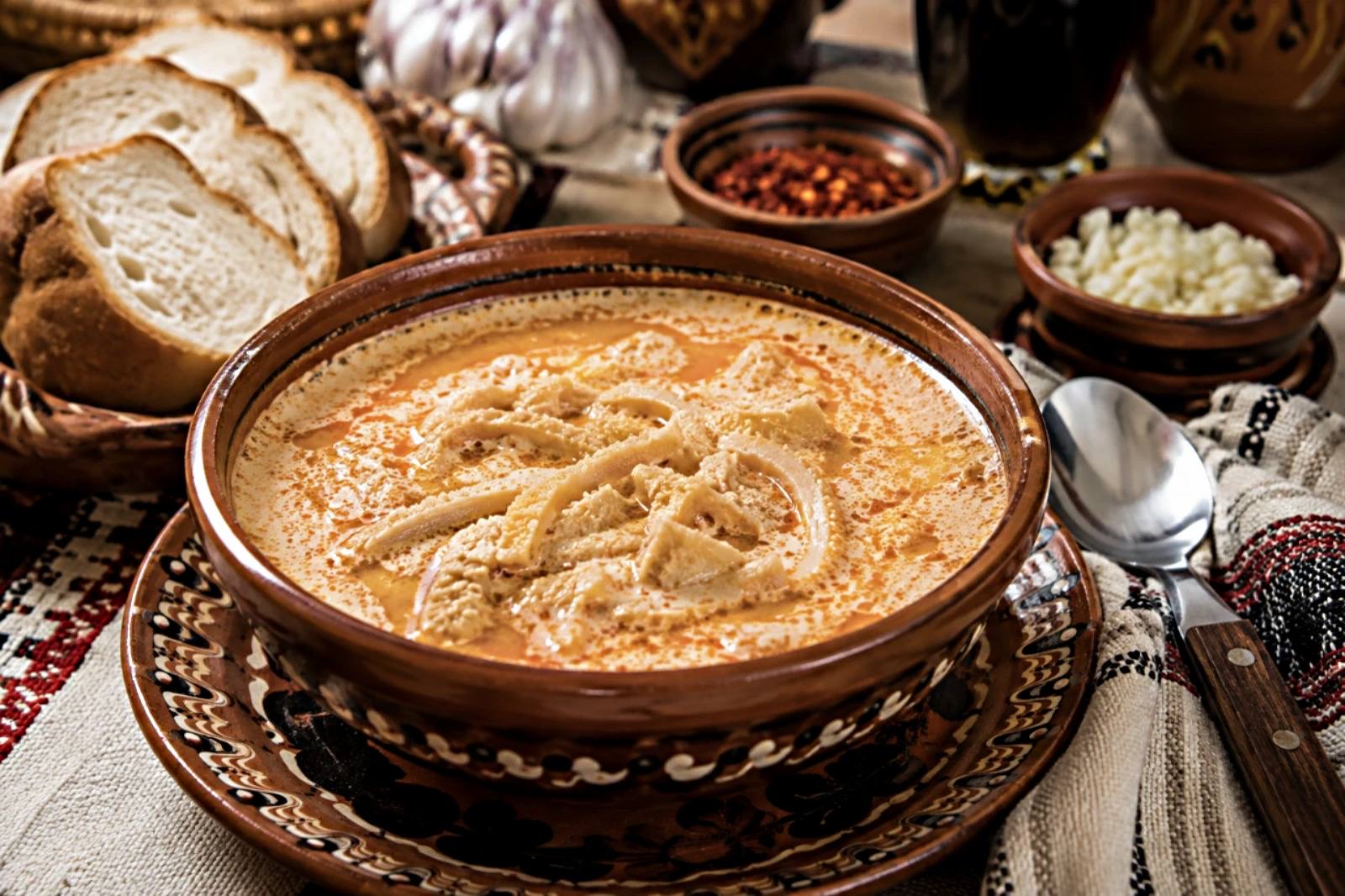
What distinguishes Bulgarian Shkembe Chorba is not only the slowly cooked beef tripe, but also the combination of milk, butter and paprika, which creates its characteristic creamy appearance and rich flavour.

Equally important is the way the soup is served. A pungent mixture of vinegar and crushed garlic traditionally accompanies the dish at the table, together with hot paprika or crushed chilli flakes. Each person adjusts the acidity, garlic and heat according to personal preference — a final ritual that is an inseparable part of the Shkembe Chorba experience.

It is straightforward, generous food — a dish that represents the comforting and intensely flavoured character of Bulgarian traditional cooking.

Ingredients

For the soup

  • 1 kg beef tripe, thoroughly cleaned
  • 1–1.2 litres water or beef stock
  • 500 ml fresh whole milk
  • 50–60 g butter
  • 1 tbsp all-purpose flour
  • 1–2 tsp sweet paprika
  • Salt, as needed

For the traditional accompaniment

  • Wine vinegar
  • Garlic, very finely chopped or crushed
  • Hot paprika or crushed chilli flakes, to taste

Preparation

  1. 1

    Clean the beef tripe thoroughly, place it in a large pot, cover with lightly salted water and bring to a boil.

  2. 2

    Reduce the heat and simmer gently until the tripe becomes completely tender — generally 2–3 hours from raw, depending on its thickness and quality.

  3. 3

    Remove the tripe, allow it to cool slightly and cut it into thin, bite-sized strips. Reserve approximately 1 litre of the cooking broth.

  4. 4

    Melt the butter in a clean saucepan over medium-low heat. Add the flour and stir continuously for a short time, allowing it to cook gently without developing a dark colour.

  5. 5

    Remove the saucepan briefly from the heat, add the sweet paprika and stir immediately so it releases its aroma without burning; overheated paprika quickly becomes bitter.

  6. 6

    Gradually add the hot reserved broth while stirring continuously to create a smooth base.

  7. 7

    Pour in the fresh milk, return the sliced tripe to the saucepan and season with salt.

  8. 8

    Bring the soup gently to temperature and simmer over low heat for approximately 10–15 minutes, avoiding aggressive boiling after the milk has been added.

  9. 9

    For the accompaniment, crush or very finely chop fresh garlic and combine it with wine vinegar, allowing it to stand briefly so the garlic releases its aroma.

  10. 10

    Serve the garlic vinegar separately at the table, together with hot paprika or crushed chilli flakes, so each guest can adjust the acidity, garlic and heat.

Plating

Shkembe Chorba should arrive at the table piping hot, in deep ceramic bowls, accompanied by fresh crusty bread and small individual dishes or bottles containing the garlic vinegar and hot chilli. The soup itself remains relatively straightforward; its final personality is created at the table.

Serving suggestion — Cook the tripe until genuinely tender but still structured, keep the roux light, never burn the paprika, and use whole milk for the characteristic richness. The garlic and vinegar are not optional garnishes — they are an essential part of the traditional Bulgarian way of enjoying this soup.

One World • One Kitchen • One Family

Share this recipe