
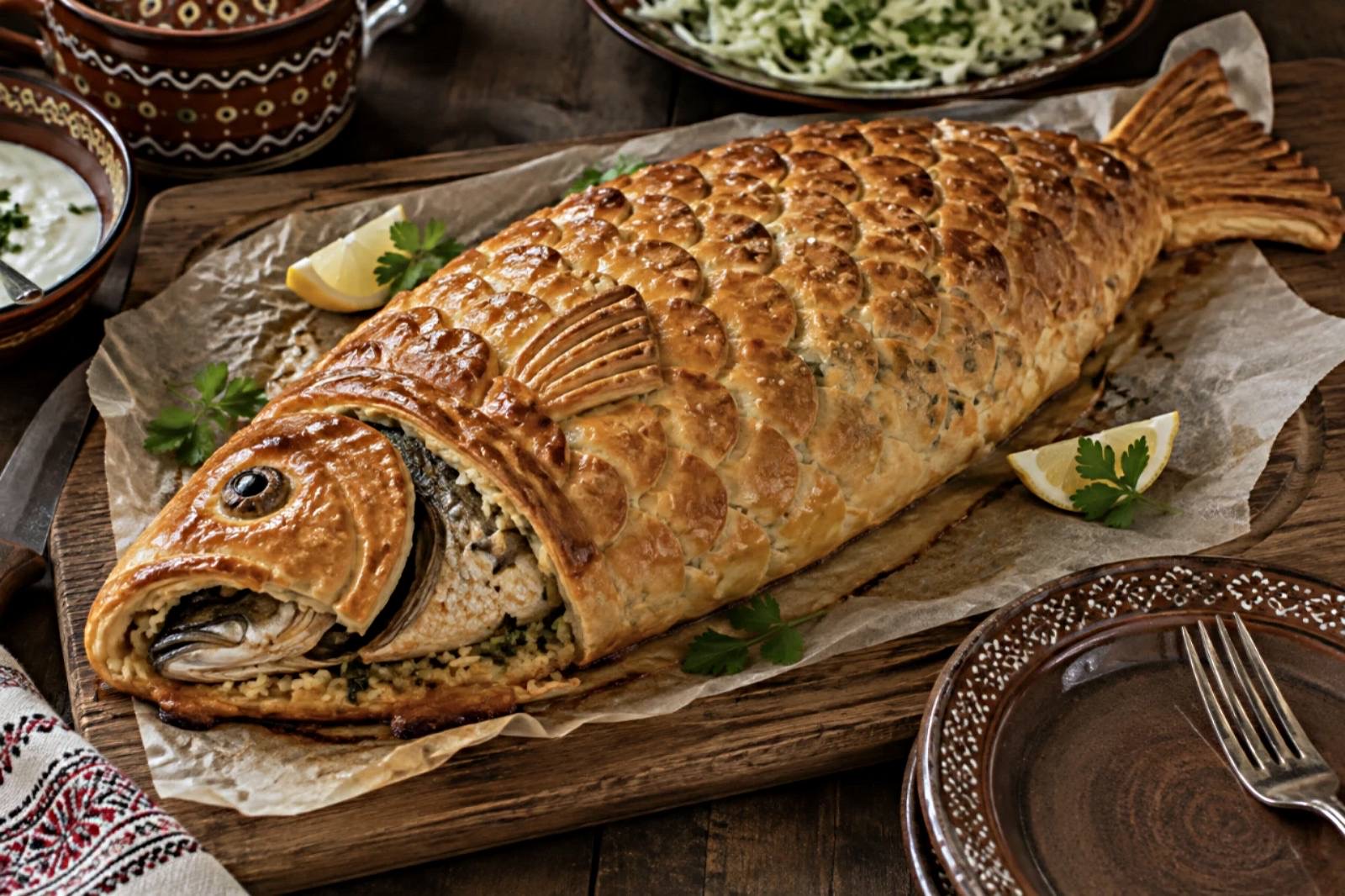
BulgariaRibnik

Presented by
Alexandra Agrafioti
Global Vice President
Global Vice President · Greece
- Yield
- 6 servings
- Preparation
- 40 minutes
- Cooking
- 50 minutes
- Difficulty
- Medium
Ribnik is one of the most iconic traditional pies of Bulgarian gastronomy and holds a special place in the country's culinary heritage. Its name derives from the Bulgarian word “riba”, meaning fish, highlighting the main ingredient that defines this beloved dish.
The history of Ribnik is closely connected with Saint Nicholas Day (Nikulden), celebrated every year on December 6th. Saint Nicholas is revered as the patron saint of fishermen, sailors, and all those whose lives are connected with rivers, lakes, and the sea. On this day, fish takes pride of place on almost every Bulgarian family table, with Ribnik being one of the most traditional and festive dishes prepared in his honor.
According to one of Bulgaria's best-known folk legends, when Saint Nicholas' boat was struck by a powerful wave that opened a hole in its hull, he used a carp to seal the opening and save the crew from sinking. Because of this legend, carp has become the traditional fish served on Saint Nicholas Day and remains the classic choice for preparing Ribnik.
Another long-standing Bulgarian tradition says that the scales of the carp symbolize prosperity, abundance, and good fortune. Many families carefully keep one dried carp scale in their wallet or beside their family icons throughout the year, believing it will bring financial prosperity and blessings to the household.
Traditionally, Ribnik is prepared using either a whole carp or boneless fish fillets wrapped in handmade pastry together with rice, onions, fresh herbs, and aromatic spices. Slow baking creates a beautifully golden, crisp crust while keeping the filling moist and flavorful, making Ribnik one of the finest examples of Bulgaria's traditional cuisine.
Today, Ribnik remains one of Bulgaria's most important festive dishes, representing not only the country's rich culinary traditions but also the values of family, hospitality, faith, and cultural heritage. It is a dish that continues to bring generations together around the same table, preserving customs that have been passed down for centuries.
Ingredients
For the pie
- 500 g rustic pastry or handmade phyllo dough
- 800 g carp, trout, or another white fish fillet, boneless
- 200 g Carolina rice
- 2 large onions, finely chopped
- 80 ml sunflower oil or extra virgin olive oil
- 40 g melted butter
- 3 spring onions, finely chopped
- ½ bunch fresh dill, finely chopped
- ½ bunch fresh parsley, finely chopped
- 1 tsp sweet paprika
- Sea salt
- Freshly ground black pepper
Preparation
- 1
Rinse the rice thoroughly and cook it for about 8 minutes, leaving it slightly firm.
- 2
Sauté the onions in the oil until soft and translucent.
- 3
Add the rice, spring onions, dill, parsley, paprika, salt, and pepper, stirring until everything is well combined.
- 4
Butter a baking dish lightly and layer half of the pastry sheets, brushing each layer with melted butter.
- 5
Spread half of the rice mixture evenly over the pastry.
- 6
Arrange the fish fillets on top and season lightly with salt and pepper.
- 7
Cover with the remaining rice mixture.
- 8
Finish with the remaining pastry sheets, brushing each layer with melted butter.
- 9
Score the top lightly and bake in a preheated oven at 180°C (355°F) for 45–50 minutes, or until the pie is beautifully golden and crisp.
Plating
Ribnik is traditionally served warm or at room temperature and pairs beautifully with a fresh seasonal salad, plain yogurt, or a wedge of fresh lemon, depending on regional customs.
Serving suggestion — The secret to an authentic Ribnik lies in achieving the perfect balance between the delicate fish and the fragrant rice filling. The fish should remain moist and tender, while the pastry should bake to a crisp, golden finish without becoming dry. Using fresh carp or trout together with fragrant herbs will give the pie its authentic Bulgarian character.
One World • One Kitchen • One Family