Back to recipes
Patatnik (Патaтник)
Bulgaria flagBulgaria

Patatnik (Патaтник)

Vegetarian
Alexandra Agrafioti

Presented by

Alexandra Agrafioti

Global Vice President

Global Vice President · Greece

Yield
6–8 servings
Preparation
30 minutes
Cooking
45–55 minutes
Difficulty
Medium

Patatnik is one of the most distinctive dishes of Bulgaria's mountain cuisine and is particularly associated with the Rhodope Mountains in the south of the country.

Its name is connected to the local word for potato, and the philosophy behind the dish reveals much about the culinary traditions of the mountain communities: a handful of humble, locally available ingredients transformed through patience and careful cooking into something deeply satisfying and full of character.

At the heart of Patatnik is the grated potato, traditionally combined with onion and aromatic herbs. One of its most distinctive characteristics is the use of mint, which gives the dish an unmistakable fragrance and sets it apart from many other European potato preparations.

As with many traditional recipes passed from one generation to the next, Patatnik does not exist in only one form. Depending on the village, locality and family tradition, it may be prepared in a pan, cooked slowly over heat, or baked in the oven. There are also regional versions in which the potato mixture is enclosed between thin layers of dough.

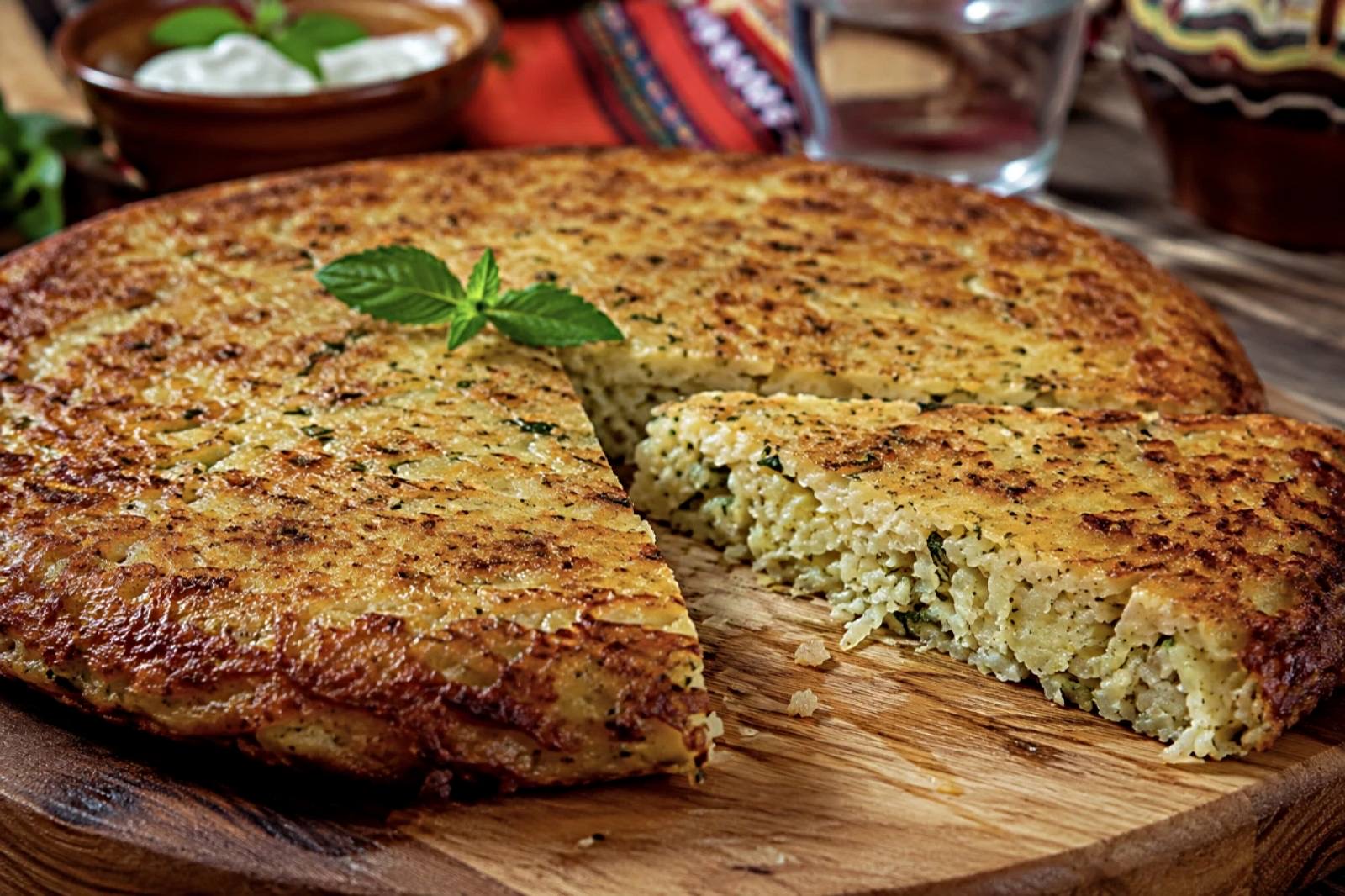
The version presented here follows the rustic philosophy of the dish: potatoes, onions, eggs, mint, butter and slow cooking, creating a beautifully golden and crisp exterior while keeping the centre soft, aromatic and tender. It is not a dish that attempts to impress through luxury — its strength lies precisely in its simplicity.

Ingredients

  • 1.5 kg potatoes
  • 2 medium onions
  • 3 eggs
  • 50 g butter
  • 2 tbsp olive oil or vegetable oil
  • 2 tsp dried mint
  • ½ tsp freshly ground black pepper
  • Salt, as needed
  • Additional butter for greasing the baking dish

Preparation

  1. 1

    Peel the potatoes and grate them using the coarse side of a grater. Transfer to a clean kitchen towel or cheesecloth and gently squeeze out some of the excess moisture — they should not be completely dry, as some natural moisture keeps the centre tender.

  2. 2

    Grate or very finely chop the onions and add them to the grated potatoes. During slow cooking they will soften and contribute a gentle natural sweetness.

  3. 3

    Add the eggs, dried mint, black pepper and salt to the potatoes and onions.

  4. 4

    Melt approximately half of the butter and add it to the mixture together with the olive or vegetable oil. Mix thoroughly until evenly distributed; the mixture should remain relatively firm with the texture of the grated potato clearly visible.

  5. 5

    Generously butter a round, relatively shallow baking dish or heavy ovenproof pan approximately 30–32 cm in diameter and spread the mixture evenly. Avoid making it excessively thick and smooth the surface gently without compressing it.

  6. 6

    Cut the remaining butter into small pieces and distribute them over the top.

  7. 7

    Bake in a preheated oven at 190°C / 375°F for approximately 45–55 minutes, until the surface is deeply golden and the edges pleasantly crisp while the centre remains soft and moist.

  8. 8

    Remove from the oven and allow to rest for 10–15 minutes before cutting, so the potato and egg mixture settles and firms slightly.

Plating

Patatnik belongs more naturally on a rustic family table than in an elaborate restaurant presentation. Serve it warm or at room temperature, cut into generous triangular portions, accompanied by Bulgarian yogurt, a glass of ayran or a fresh seasonal salad. For a more traditional presentation, bring the whole Patatnik to the centre of the table and cut it in front of the guests, revealing the contrast between the golden crisp exterior and the soft, aromatic interior.

Serving suggestion — Choose starchy potatoes suitable for baking so the mixture binds naturally. Remove excess moisture — but not all of it. Mint should be noticeable but never overwhelming, and the Patatnik should not be too thick: the balance between crisp surface and tender centre is essential. Butter contributes both aroma and the characteristic golden crust, steady gradual heat is better than rushing, and the 10–15 minute rest is part of the recipe.

One World • One Kitchen • One Family

Share this recipe