
Back to recipes
Kavarma (Кавърма)
Bulgaria flagBulgaria

Kavarma (Кавърма)

Alexandra Agrafioti

Presented by

Alexandra Agrafioti

Global Vice President

Global Vice President · Greece

Yield
6–8 servings
Preparation
30 minutes
Cooking
Approximately 1 hour 30 minutes
Difficulty
Medium

Kavarma is one of those dishes that beautifully expresses the warm, generous and deeply home-style character of Bulgarian cuisine.

At its heart, it is a slow-cooked dish in which tender meat meets generous amounts of onions, peppers, tomatoes, wine and aromatic seasonings, gradually developing into a rich and concentrated sauce.

As with many traditional Balkan dishes passed from generation to generation, Kavarma does not exist as one single definitive recipe. Pork is particularly common, although versions prepared with chicken and other meats can also be found. Another characteristic feature is its association with traditional clay cooking vessels, in which the ingredients continue cooking gently before the dish arrives at the table still bubbling and aromatic.

The philosophy behind Kavarma is essentially one of concentrating flavour through time. The meat is deeply browned, the onions are cooked slowly until naturally sweet, peppers contribute their distinctive vegetal character, wine brings acidity and depth, while tomatoes bind everything together.

This is not food that benefits from being rushed. Kavarma needs time — and time is one of its most important ingredients.

Ingredients

For the Kavarma

  • 1.5 kg pork shoulder or pork neck, cut into cubes
  • 700 g onions, thinly sliced
  • 2 red peppers, cut into strips
  • 2 green peppers, cut into strips
  • 3 garlic cloves, finely chopped
  • 400 g ripe tomatoes, finely chopped or grated
  • 1 tbsp tomato paste
  • 200 ml dry red wine
  • 80 ml vegetable oil or olive oil
  • 150–200 ml light stock or water, only if required
  • 1 tsp sweet paprika
  • ½ tsp dried summer savory
  • 2 bay leaves
  • Freshly ground black pepper
  • Salt, as needed
  • Fresh parsley, for finishing

Preparation

  1. 1

    Remove the pork from the refrigerator about 20 minutes before cooking and pat it thoroughly dry — excess surface moisture prevents proper caramelisation. Cut into even pieces of approximately 3–4 cm and season lightly with salt and pepper.

  2. 2

    Heat the oil in a wide, heavy-bottomed pot over medium-high heat and brown the pork in small batches without overcrowding, developing a deep golden colour on all sides. Transfer each batch to a plate.

  3. 3

    Add the sliced onions to the same pot, reduce the heat slightly and cook gently for 10–12 minutes, stirring occasionally, until softened and naturally sweet. Add the garlic and cook one minute more.

  4. 4

    Add the red and green peppers and cook for 5–6 minutes, until beginning to soften while retaining some structure. Stir in the tomato paste and cook for about a minute to deepen its flavour.

  5. 5

    Reduce the heat, add the sweet paprika and stir quickly so it does not burn and turn bitter.

  6. 6

    Return the browned pork and any accumulated juices to the pot, pour in the red wine and let it simmer for several minutes so the harsh alcoholic edge evaporates while its acidity and depth remain.

  7. 7

    Add the tomatoes, summer savory and bay leaves, stirring gently. Add a small amount of hot stock or water only if necessary — Kavarma should never become a soup.

  8. 8

    Cover and simmer over low heat for approximately 50–60 minutes, or until the pork is tender.

  9. 9

    Remove the lid and continue cooking for another 10–15 minutes so excess moisture evaporates and the sauce becomes thick and concentrated, coating the meat and vegetables.

  10. 10

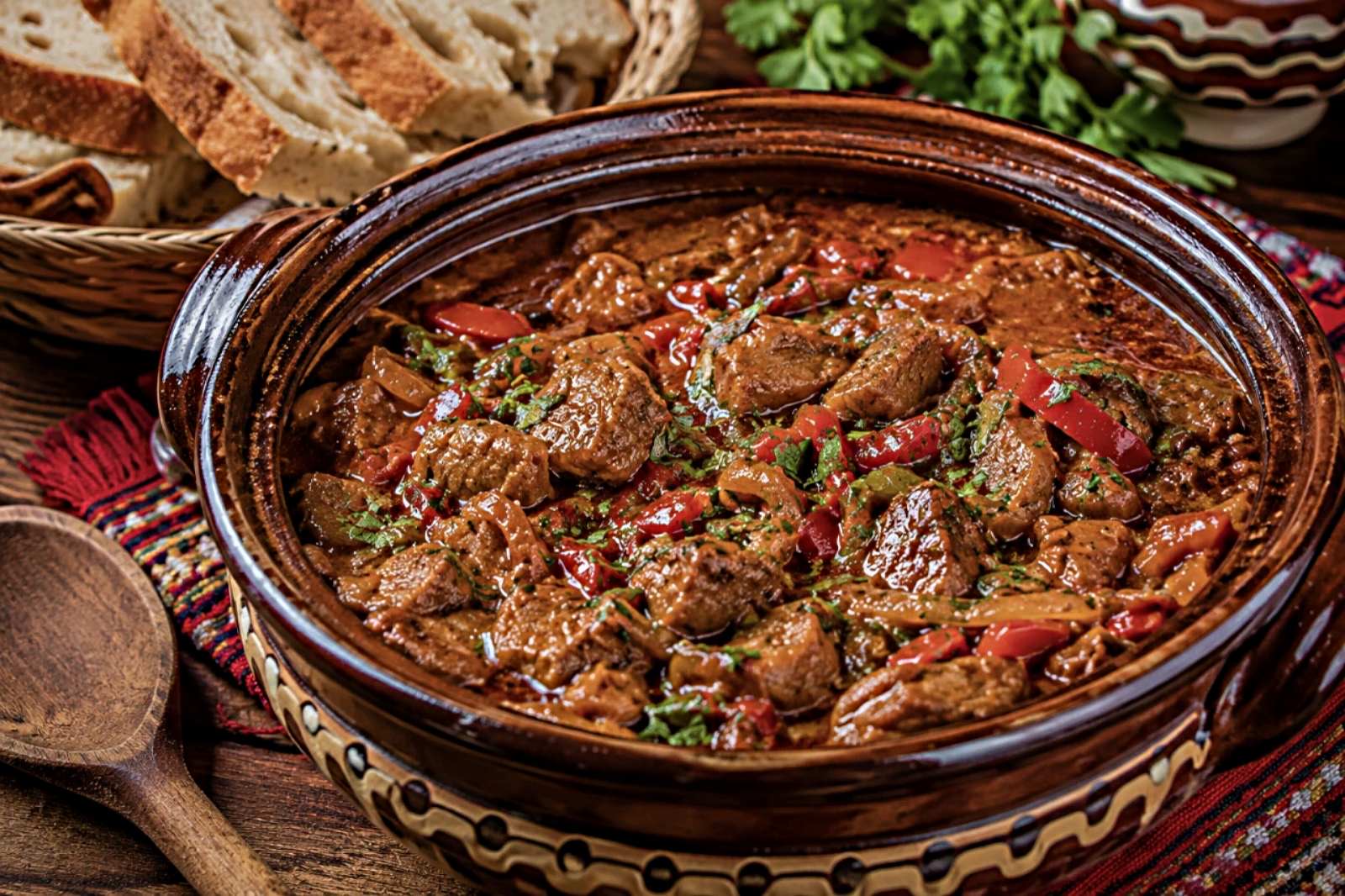
    For a more traditional presentation, transfer the Kavarma into individual clay pots and finish in a hot oven for 10–15 minutes. The final dish should be succulent but never watery, with almost melting onions, tender peppers and exceptionally soft pork.

Plating

Serve piping hot, ideally in a traditional clay pot, finished with freshly chopped parsley and accompanied by good rustic bread — the rich sauce of pork juices, wine, onions, peppers and tomatoes practically demands it. For a communal meal, place a larger clay vessel directly in the centre of the table and share it among the guests.

Serving suggestion — Brown the meat in batches so it caramelises rather than steams. Do not underestimate the onions — their quantity and slow cooking provide much of the sweetness and body. Treat the paprika carefully, give the wine time to reduce, avoid excessive liquid, and use summer savory with restraint. Like many slow-cooked dishes, Kavarma often tastes even better the following day.

One World • One Kitchen • One Family

Share this recipe