
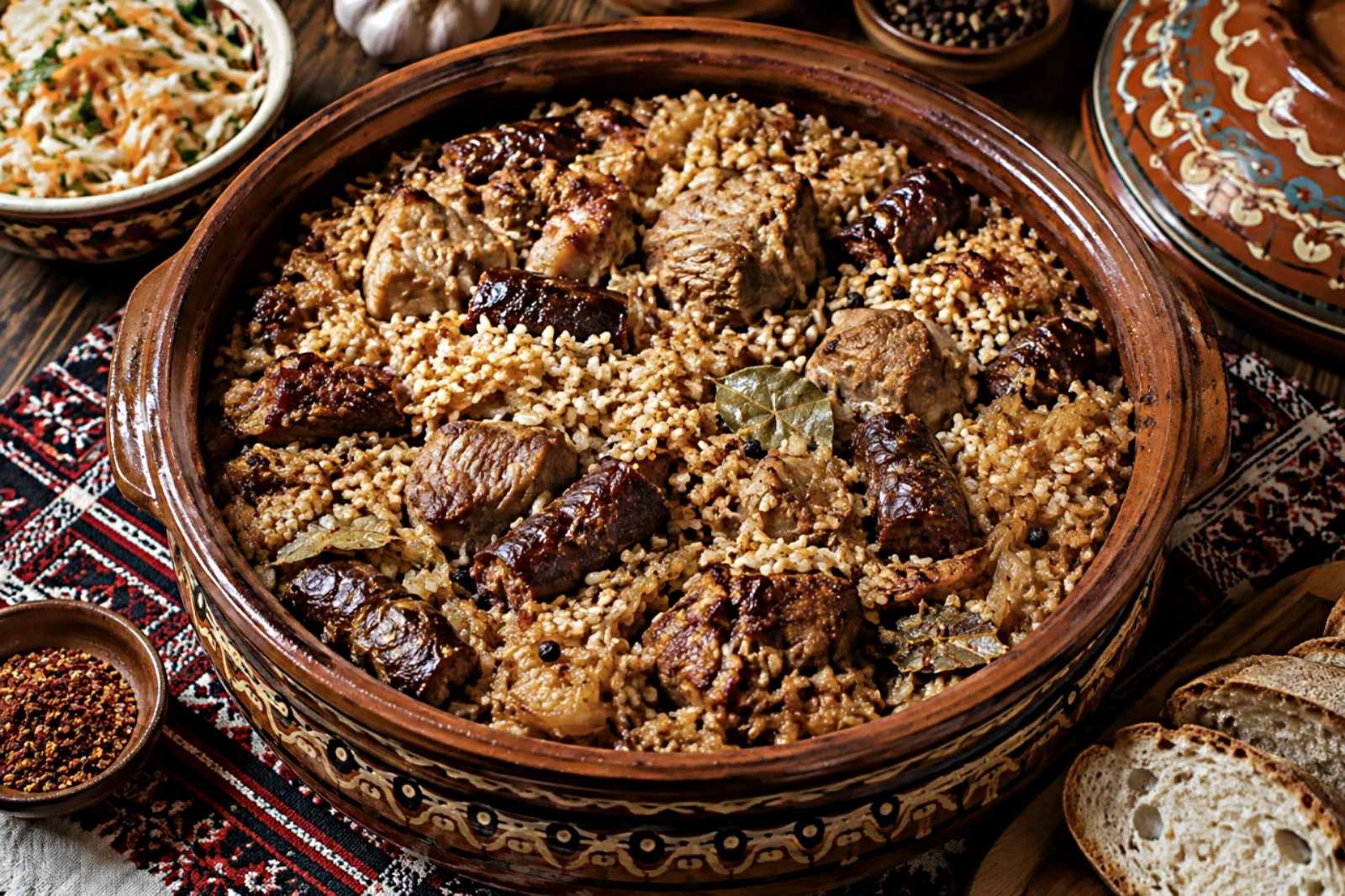
BulgariaBulgarian Kapama

Presented by
Alexandra Agrafioti
Global Vice President
Global Vice President · Greece
- Yield
- 8–10 servings
- Preparation
- 40 minutes
- Cooking
- 4–5 hours
- Difficulty
- Medium
Kapama (Капама) is one of the most distinctive dishes of traditional Bulgarian cuisine, particularly associated with Bansko and Southwestern Bulgaria.
Rich, aromatic and deeply comforting, Kapama is a slow-cooked dish in which several types of meat are layered with sauerkraut, rice and traditional spices before being cooked gently for several hours.
Traditionally, Kapama is prepared in a large clay pot, which is tightly sealed before being placed in the oven. The long, slow cooking process allows the juices of the different meats to mingle with the acidity of the sauerkraut, while the rice gradually absorbs the rich aromas created inside the pot.
More than simply a hearty meal, Kapama reflects the warmth of Bulgarian hospitality. It is particularly associated with the colder months, festive occasions and family gatherings, when a generous clay pot is placed at the centre of the table and shared among family and friends.
Ingredients
- 700 g pork shoulder, cut into large pieces
- 600 g beef shoulder, cut into large pieces
- 500 g lamb, cut into pieces
- 250 g traditional Bulgarian sausage or rustic smoked sausage
- 1.5 kg sauerkraut, drained and roughly chopped
- 150 g rice
- 2 large onions, thinly sliced
- 3 garlic cloves
- 150 ml dry red wine
- 150–200 ml meat stock or water
- 2 tbsp pork fat or sunflower oil
- 2 tsp sweet paprika
- 1 tsp freshly ground black pepper
- 1 tsp Bulgarian savory (chubritsa)
- 2–3 bay leaves
- 5–6 whole black peppercorns
- Salt, only if required
Preparation
- 1
Drain the sauerkraut thoroughly. If it is particularly salty or acidic, rinse it briefly under cold water and drain again, then season with the sweet paprika and a little freshly ground black pepper.
- 2
Cut the pork, beef and lamb into relatively large pieces and season with black pepper and a little chubritsa. Use salt sparingly, as both the sauerkraut and the sausage already contribute considerable seasoning.
- 3
Lightly grease the inside of a large clay pot with pork fat or sunflower oil. Begin with a generous layer of sauerkraut, then add some sliced onion, a little rice and a selection of the meats.
- 4
Continue building alternating layers of sauerkraut, pork, beef, lamb, sausage, onion and rice, distributing the garlic, bay leaves and whole peppercorns between the layers. Finish with a generous layer of sauerkraut covering everything.
- 5
Pour the red wine over the assembled ingredients and add enough meat stock or water to provide moisture for the long cooking process, without completely submerging the contents.
- 6
Close the pot tightly with its lid; traditionally the edge may be sealed with a simple flour-and-water dough to trap the steam and aromas inside.
- 7
Place the earthenware pot in a cold oven and gradually bring the temperature to approximately 150–160°C / 300–320°F. Cook slowly for 4–5 hours, avoiding opening the pot repeatedly during cooking.
Plating
Allow the Kapama to rest for 15–20 minutes before opening and serving. Present it in deep rustic ceramic plates, ensuring that each portion contains a selection of the different meats together with sauerkraut, rice and the intensely flavoured cooking juices. It is particularly enjoyable with rustic bread and Bulgarian red wine.
Serving suggestion — Kapama should never be rushed. Its character comes from long, gentle cooking inside a tightly sealed vessel, and allowing the finished dish to rest before serving lets its flavours settle and harmonize.
One World • One Kitchen • One Family