Back to recipes
Tortillitas de Camarones
Spain flagSpain

Tortillitas de Camarones

Stylianos Digkas

Presented by

Stylianos Digkas

Executive Chef

Global President · Greece

Yield
6 servings / approximately 18–20 tortillitas
Preparation
20 minutes + 30 minutes resting
Cooking
20–25 minutes
Difficulty
Medium

Tortillitas de Camarones are one of the most distinctive delicacies of coastal Andalusia and an emblematic expression of the culinary heritage of Cádiz.

Thin, irregular and exceptionally crisp, they sit somewhere between a delicate fritter and an almost lace-like savoury pancake. Their defining ingredient is the tiny shrimp known locally as camarones, traditionally incorporated whole into the batter.

The dish is closely associated with the coastal communities surrounding the Bay of Cádiz and represents the essence of cocina gaditana — the traditional cuisine of Cádiz, where the sea, humble ingredients and careful technique come together without unnecessary complexity.

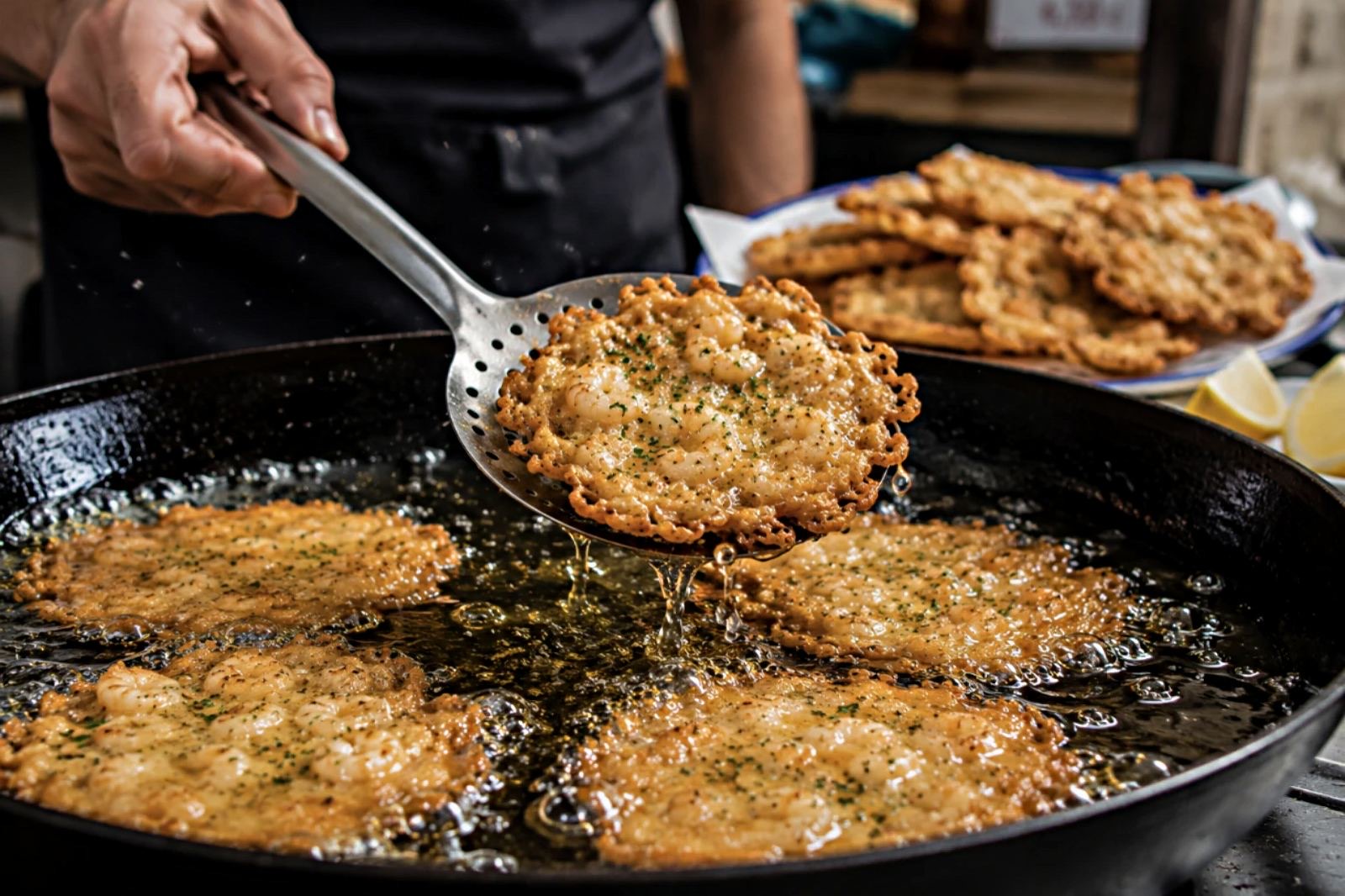
Flour, water, tiny shrimp, onion, parsley and hot oil. Nothing elaborate. Yet a properly prepared Tortillita de Camarones is remarkably distinctive: very thin, crisp and light, with irregular, almost lace-like edges, while the tiny shrimp remain clearly visible throughout its surface.

The goal is not a thick, fluffy fritter. Instead, we want something delicate and brittle, with a satisfying crunch and an unmistakable taste of the sea.

Ingredients

For the Tortillitas

  • 250 g very small shrimp
  • 120 g all-purpose wheat flour
  • 80 g chickpea flour
  • 400–450 ml very cold water
  • 1 small onion, extremely finely chopped
  • 3 tbsp fresh parsley, finely chopped
  • ½ tsp salt, or as needed
  • Olive oil or suitable vegetable oil, for frying

Preparation

  1. 1

    Prepare the batter: in a large bowl combine the wheat flour, chickpea flour and salt. Gradually pour in the very cold water, whisking continuously until a thin and fluid batter forms.

  2. 2

    This consistency is essential — the batter should be considerably thinner than a conventional fritter batter so that it spreads quickly and naturally in the hot oil.

  3. 3

    Add the finely chopped onion and fresh parsley and mix until evenly distributed throughout the batter.

  4. 4

    Add the tiny shrimp, stir gently, then refrigerate the mixture for approximately 30 minutes so the ingredients come together while the batter stays cold.

  5. 5

    Pour enough oil into a wide frying pan to allow the tortillitas to fry freely and heat it to approximately 175–180°C / 347–356°F.

  6. 6

    Before frying each batch, gently stir the batter, as the shrimp and other solid ingredients naturally settle at the bottom of the bowl.

  7. 7

    Take a small ladleful of batter and carefully pour it into the hot oil, using the back of the ladle if needed to encourage it to spread. Each tortillita should be thin and relatively flat, never thick.

  8. 8

    Fry for approximately 1–2 minutes per side, until beautifully golden with crisp, irregular edges and the shrimp visible across the surface.

  9. 9

    Remove each tortillita with a slotted spoon and drain briefly on a wire rack or absorbent kitchen paper.

  10. 10

    Continue with the remaining batter, always allowing the oil to return to the correct temperature between batches, and serve immediately.

Plating

Tortillitas de Camarones should reach the table almost immediately after leaving the frying pan. Arrange several loosely on a simple ceramic platter or food-safe paper, allowing their irregular shapes and crisp edges to remain visible. They require no heavy sauces — the flavour should stay clean and direct: crispy batter, shrimp, onion, parsley and the taste of the sea. Serve as a tapa, an appetiser, or as part of a larger Spanish table of small dishes for sharing.

Serving suggestion — Keep the batter thin — too thick and the result is heavy and soft rather than delicate and crisp. Tiny shrimp are the soul of the recipe; large peeled prawns are not the objective. Stir before frying each portion, control the oil temperature, never overcrowd the pan, and look for thin, lace-like edges. Serve without delay: the finest texture exists during the first few minutes after frying.

One World • One Kitchen • One Family

Share this recipe