
GreeceGreek Octopus Stifado

Presented by
Stylianos Digkas
Executive Chef
Global President · Greece
- Yield
- 6–8 servings
- Preparation
- 30 minutes
- Cooking
- Approximately 1 hour 30 minutes
- Difficulty
- Medium
Octopus Stifado is one of those dishes that beautifully expresses the relationship between the Greek kitchen, the sea and the land.
From the islands of the Aegean and Greece’s coastal communities to family tables across the mainland, octopus has been an important part of Greek culinary tradition for generations. Grilled over charcoal, marinated with vinegar, slowly cooked in wine or combined with pasta, it remains one of the most recognisable ingredients of the country’s maritime cuisine.
In this dish, octopus meets another great tradition of Greek cooking: stifado, the slow-cooking technique characterised by onions, wine, vinegar and warm aromatic spices. Small onions gradually become sweet and almost caramelised, while the octopus tenderises in its own natural juices.
Bay leaves, allspice and cinnamon provide the characteristic aromatic background of a traditional stifado. None should dominate; their purpose is to work together subtly, giving the sauce warmth, complexity and its unmistakable identity.
It is a dish built from relatively simple ingredients yet capable of remarkable depth — a perfect example of the wisdom of traditional Greek cooking.
Ingredients
For the octopus stifado
- 2 kg cleaned octopus
- 1.2 kg small pearl onions or shallots, suitable for stifado
- 3 garlic cloves
- 100 ml extra virgin olive oil
- 200 ml dry red wine
- 50 ml red wine vinegar
- 400 g ripe chopped tomatoes or peeled canned tomatoes
- 1 tbsp tomato paste
- 2 bay leaves
- 5–6 whole allspice berries
- 1 small cinnamon stick
- 6–8 black peppercorns
- 1 small sprig fresh thyme, optional
- Freshly ground black pepper
- Salt, only if required at the end
Preparation
- 1
Rinse the cleaned octopus thoroughly, allow it to drain and cut it into relatively large pieces, remembering that it will reduce in size during cooking.
- 2
Place a wide saucepan over medium heat without adding any water, add the octopus and cover the pan.
- 3
Allow it to cook gently for approximately 20–25 minutes, turning the pieces occasionally, as it releases its own natural juices. Remove the octopus and reserve the intensely flavoured cooking liquid.
- 4
Carefully peel the small onions, keeping the root ends as intact as possible so they hold their shape during the long cooking process.
- 5
Heat the olive oil in a wide saucepan, add the onions and sauté over medium heat for approximately 8–10 minutes, turning carefully until lightly golden. Add the garlic and cook for another minute.
- 6
Add the tomato paste and cook for approximately one minute to deepen its flavour.
- 7
Deglaze with the red wine and allow it to simmer for a few minutes so part of the alcohol evaporates, leaving behind its aroma, acidity and depth.
- 8
Add the red wine vinegar, then stir in the chopped tomatoes, bay leaves, allspice berries, cinnamon stick, peppercorns and, if using, the fresh thyme.
- 9
Add some of the natural cooking liquid released by the octopus during the first stage.
- 10
Return the octopus to the saucepan, reduce the heat and simmer gently with the lid partially covering the pan for approximately 45–60 minutes.
- 11
Avoid stirring vigorously so the small onions remain whole; instead, gently shake the saucepan from time to time to redistribute the ingredients and sauce.
- 12
The stifado is ready when the octopus is tender, the onions are softened and glazed without falling apart, and the sauce has reduced to a rich, glossy consistency.
- 13
Remove the bay leaves and cinnamon stick, then taste the sauce and only now decide whether additional salt is necessary, as octopus is naturally salty.
- 14
Finish with freshly ground black pepper and, if greater acidity is desired, just a few additional drops of red wine vinegar.
- 15
Remove from the heat and allow the dish to rest for 15–20 minutes before serving.
Plating
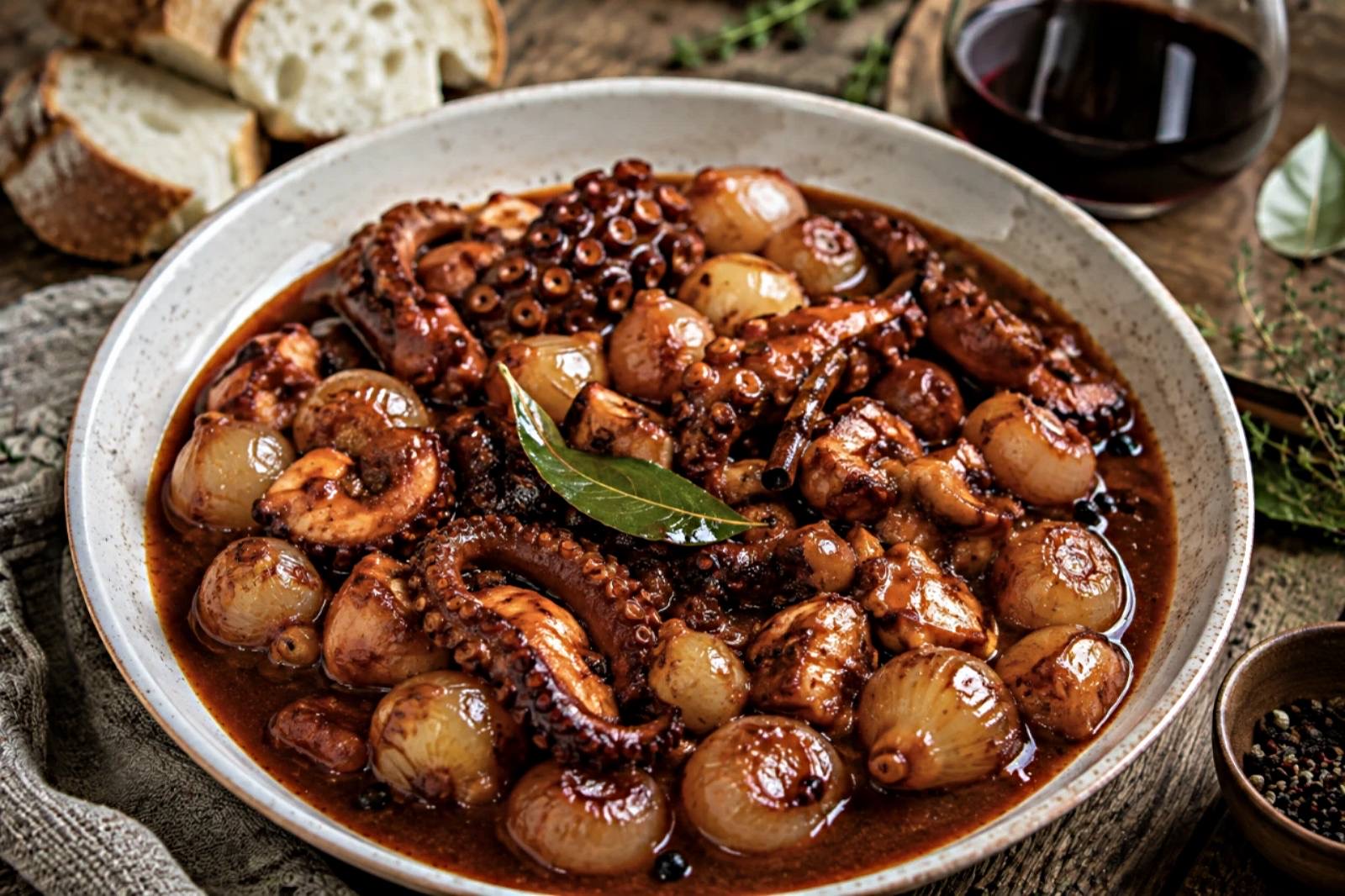
Serve generously in a deep earthenware or ceramic dish, placing the tender pieces of octopus at the centre, surrounded by the whole glazed onions and plenty of the rich red sauce. Good rustic country bread is almost essential alongside it. The dish can be enjoyed hot, but it is equally delicious slightly cooled, as the individual aromas become even more pronounced.
Serving suggestion — Never add water when first cooking the octopus — its own juices carry concentrated flavour for the sauce. Be cautious with salt, keep the onions whole, use cinnamon with restraint and allow the sauce to thicken naturally through slow reduction. Like many slow-cooked dishes, it is often even better the following day.
One World • One Kitchen • One Family