Back to recipes
Andros Pasteli
Greece flagGreece

Andros Pasteli

Vegetarian
Andreas Palaiokrassas

Presented by

Andreas Palaiokrassas

Mediterranean & Italian Culinary Expertise

Professional Member · Greece

Yield
1 large baking tray — portions depend on the size and shape of the pieces
Preparation
30–40 minutes
Cooking
20–25 minutes
Difficulty
Medium

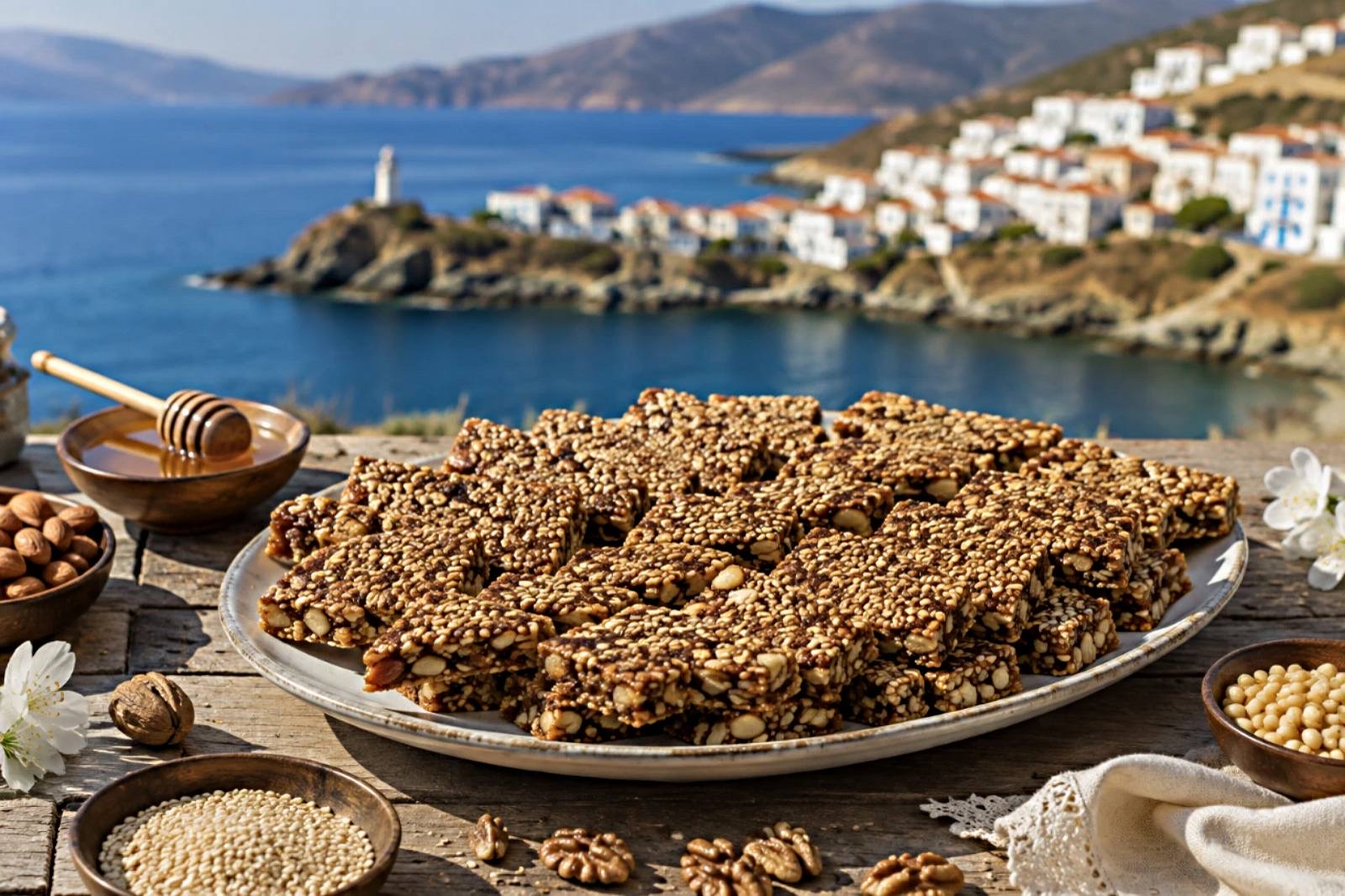
Within the rich culinary tradition of the Cycladic islands, sweets made with honey, sesame, and nuts hold a special place. On the island of Andros, Pasteli develops its own distinctive identity, quite different from the thin, crisp sesame-and-honey version more commonly known throughout Greece.

The Andros interpretation is rich, aromatic, and generously filled with nuts. Walnuts and toasted almonds are combined with honey, sesame seeds, pine nuts, nutmeg, and the delicate floral fragrance of orange blossom water, creating a confection of remarkable depth and texture.

Pasteli belongs to the wider family of Greek preparations based on honey and sesame, two ingredients with a presence in Greek food culture stretching back to antiquity. Over the centuries, however, different regions and islands developed their own interpretations according to local ingredients, customs, and family traditions.

In Andros, such traditional preparations became part of a culinary heritage passed from one generation to the next. The abundance of nuts, the subtle fragrance of blossom water, and the warm aroma of freshly grated nutmeg give this particular Pasteli its distinctive island character.

It is a recipe that beautifully expresses the philosophy of traditional Greek confectionery: simple ingredients transformed through knowledge, patience, and memory into something truly special — recipes are not merely combinations of ingredients, but living expressions of place, memory, family, and cultural heritage.

Ingredients

  • 1 kg walnuts, coarsely chopped
  • 150–200 g almonds, toasted and coarsely chopped
  • 250 g fine breadcrumbs
  • 200 g sugar
  • 1 kg honey
  • ½ whole nutmeg, freshly and finely grated
  • 100 g pine nuts
  • 500 g sesame seeds
  • 4–5 drops lemon juice
  • Orange blossom water, as needed

Preparation

  1. 1

    Coarsely chop the walnuts and toasted almonds, taking care not to grind them into a fine powder — their texture should remain noticeable in the finished Pasteli. Combine with the breadcrumbs and pine nuts.

  2. 2

    Finely grate the nutmeg and incorporate it into the dry mixture. Freshly grated nutmeg is preferable, as it provides a warmer, more complex aroma than pre-ground nutmeg.

  3. 3

    Line a large baking tray with parchment paper. Lightly sprinkle the surface with orange blossom water and cover the base evenly with sesame seeds.

  4. 4

    Place the honey and sugar in a saucepan over low heat. Heat gently, stirring as necessary, until the mixture reaches approximately 60°C. Add the lemon drops and mix gently — the honey should not be aggressively boiled.

  5. 5

    Remove the saucepan from the heat and gradually add the walnut, almond, breadcrumb, and pine nut mixture to the warm honey syrup. Mix thoroughly until all the dry ingredients are evenly coated and bound together.

  6. 6

    Immediately transfer the warm mixture to the prepared tray and spread it evenly while still warm and pliable. Generously sprinkle the remaining sesame seeds over the surface.

  7. 7

    Using your hands or a rolling pin, gently but firmly press the mixture until it forms an even, compact layer. If working by hand, lightly moisten the hands with blossom water to prevent sticking.

  8. 8

    Allow the Pasteli to cool and begin to set, but do not wait until completely firm. While still slightly warm, cut it into diamonds, squares, or rectangular pieces, then allow it to cool completely before serving or storing.

Plating

Present the Pasteli in small diamond-shaped or rectangular pieces on a wooden board or handcrafted ceramic platter, with a few walnuts, almonds, and toasted sesame seeds around the plate. It pairs beautifully with Greek coffee or a warm herbal infusion. For a contemporary restaurant presentation, a smaller portion may be accompanied by Greek yogurt or a delicate ice cream, while keeping the Pasteli as the central element.

Serving suggestion — The quality of the honey defines the final character of this recipe — a fragrant Greek honey gives greater depth. Keep the nuts coarsely chopped, toast the almonds and sesame lightly to avoid bitterness, and use orange blossom water with restraint. Timing matters when cutting: once completely cold and firm, the Pasteli becomes difficult to cut cleanly.

One World • One Kitchen • One Family

Share this recipe